Ploy and the Embodiment of Larry Chiang’s #web12 Vision
In mid-2026, an AI tool named Ploy emerged with a bold promise: to transform any website into its owner’s “hardest-working growth channel.” By “slurping” an existing site to learn its design system, components, and brand voice, Ploy then autonomously designs pages, writes copy, launches and optimizes campaigns, and syncs everything back to a CRM—all running continuously in the background. Marketers are freed to focus on story, positioning, and customers rather than endless coordination between design, copy, and development teams. “One you, infinite Ploy,” its tagline declares. @larrychiang
This development did not arrive in a vacuum. Entrepreneur and longtime web commentator Larry Chiang had already articulated a parallel vision nearly a year earlier.
On July 11, 2025, he released content under the banner “Web-12” (or #web12), framing it as the next evolution in his personal sequence of web paradigms (following his earlier coinages of Web 3, Web 4, and Web 5). In subsequent commentary and posts, Chiang positioned #web12 as a “deja new” framework—one that Ploy strikingly instantiates. The parallels are not coincidental; they reveal a coherent philosophy of web sovereignty powered by ownership, simplicity, automation, and human focus.
What Is #web12?
Larry Chiang’s #web12 is not a numbered successor to blockchain-centric “Web3” in the conventional sense. Instead, it represents his idiosyncratic progression of web eras, emphasizing a return to—and radical upgrade of—personal, owned digital real estate. Key themes drawn from his July 2025 Web-12 materials and ongoing commentary include:
• Layerless architecture and trackbacks: Direct, transparent interconnections between content creators and audiences, evoking early web features like trackbacks (automatic notifications when one site links to another) without the opaque algorithmic layers of social platforms.
• Owned websites as the central hub: Your own site is the one surface you fully control, unlike rented real estate on social media or third-party platforms. It serves as the distribution point and growth engine.
• Distributed, low-friction publishing: Solutions such as “Email Publish Post” for easy, decentralized content distribution.
• Remedy to Web 2.0 pathologies: Social media “fries the brain,” creates addiction, and forces constant coordination and performance. #web12 counters this by making the personal website self-sustaining so creators can focus on substantive work rather than platform maintenance.
• AI as enabler, not replacement: Automation handles execution so humans handle meaning—story, positioning, and relationships.
Chiang has repeatedly framed #web12 as the practical answer to contemporary digital frustrations, from social media burnout to inefficient marketing workflows. His personal site (web12.io), updated via simple WordPress-from-iPhone publishing, serves as a living prototype of the approach.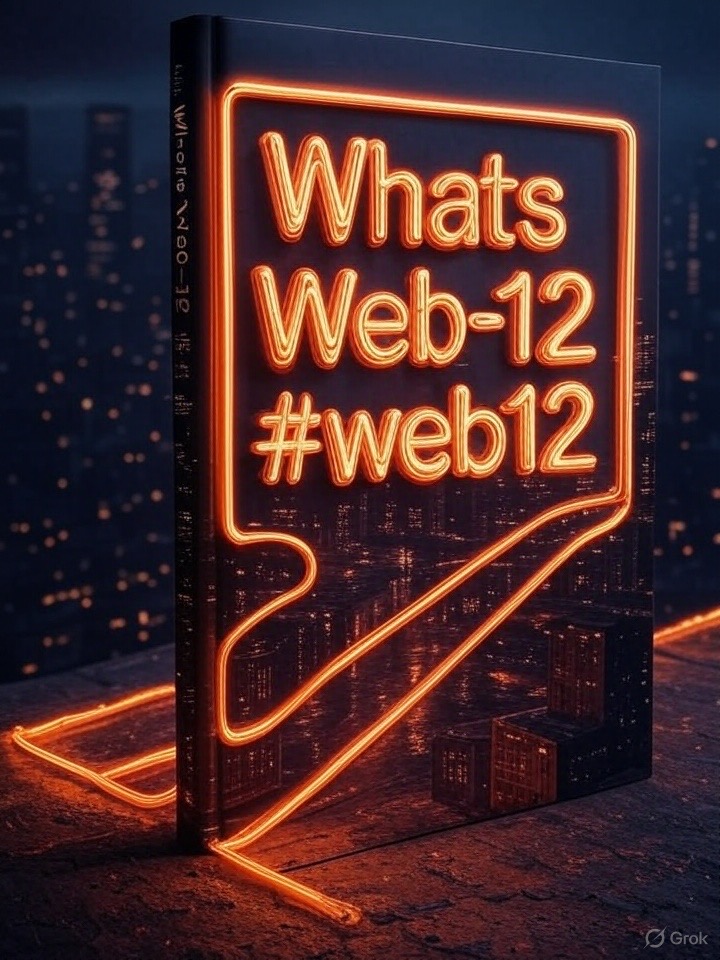
Ploy as the Practical Realization of #web12
Ploy maps almost perfectly onto Chiang’s framework, making it a vivid “deja new” embodiment of the July 11, 2025 vision:
1. Website as Sovereign Growth Engine
Both emphasize the owned website as the primary asset. Ploy explicitly states: “your website is the one surface you fully own, and the hub that connects every growth channel.” It then automates everything else so the site “runs itself.” This directly echoes #web12’s insistence that the personal site—not rented social feeds—should be the hardest-working element in one’s digital presence.
2. Automation Liberates Human Creativity
Ploy removes the coordination bottlenecks (“waiting in line behind other priorities”) so marketers can concentrate on “the story, the positioning, and the customers.” Chiang’s #web12 similarly seeks to solve Web 2.0 distractions and execution drag, freeing mental bandwidth for higher-value activities. The tool’s background optimization and CRM syncing represent the automated “trackback” and distribution layer Chiang envisioned.
3. Layerless, Brand-Consistent Expansion
By learning an existing site’s design system and brand from day one, Ploy ensures new output feels native rather than imposed by external platforms or generic AI. This aligns with the “layerless” quality of #web12—organic growth rooted in the owner’s authentic identity rather than algorithmic intermediaries.
4. Distributed and Scalable Without Complexity
“One you, infinite Ploy” captures the distributed, multiplicative effect Chiang associates with #web12 publishing and automation. A single human vision scales through AI execution without requiring proportional increases in team coordination or platform dependency.
5. Timing and Recognition
Chiang’s own June 2026 post quoting Ploy’s description carried the annotation “>> deja New. 7-11-25 #web12.” He explicitly linked the new tool back to his earlier articulation, recognizing Ploy as a concrete technological fulfillment of the conceptual framework he introduced the previous July.
Broader Implications
The convergence of Ploy and #web12 signals a maturing phase in digital entrepreneurship. For over a decade, businesses and creators have been pulled toward platform-dependent strategies—optimizing for algorithms on rented land. Both Ploy and Chiang’s #web12 advocate reclaiming sovereignty: build (or enhance) your own site, let AI handle the repetitive heavy lifting, and redirect human effort toward irreplaceable elements like narrative and relationships.
This shift has practical advantages. Owned websites offer data control, brand consistency, and resilience against platform policy changes or algorithm shifts. When augmented by tools like Ploy, they become dynamic assets rather than static brochures. For marketers and founders, the result is leverage: one person’s strategy amplified by continuous, intelligent execution.
Critics might note risks—over-reliance on any single AI tool, potential homogenization if many sites use similar systems, or the need for initial high-quality brand foundations. Yet these concerns reinforce rather than undermine the core thesis: success still hinges on distinctive human input (story and positioning), exactly as both Ploy’s messaging and #web12 philosophy insist.
Conclusion
Ploy is more than a clever marketing automation product. It is a working prototype of the web paradigm Larry Chiang outlined on July 11, 2025, under the #web12 banner. Where Chiang provided the philosophical and conceptual map—layerless, owned, automated, human-centered web presence—Ploy supplies the practical engine. Together they point toward a future in which individuals and organizations no longer serve platforms but are served by their own intelligently self-sustaining digital properties.
In an era of agentic AI traffic surpassing human traffic and social platforms increasingly optimized for engagement over substance, the call to “get a website” and make it work harder than you do feels less like nostalgia and more like strategic clarity. Ploy demonstrates that Chiang’s 2025 vision is not merely aspirational but achievable today. The web’s next chapter may well be written on sites that, thanks to tools like Ploy, never stop improving themselves—while their owners focus on what only humans can provide.
@EmailPublishPos Ploy turns your website into your hardest-working growth channel.
It starts by slurping your existing site to learn your design system, components, and brand, so everything it makes looks like you from day one. From there, Ploy designs the pages, writes the copy, launches the

Larry Chiang, 650-283-8008 (@LarryChiang)
x.com
Steve Jobs Texted me on 650-283-8008 in the same way that Mr Jobs called Bill Hewlett
Larry Chiang
Fund of Founders
Founding Stanford EIR
@duck9 alum, Deeply Understood Capital Credit Chinese Capital Knowledge 9. DuCCCCK9
Solo Founder Uber API
650-566-9600 Office
650-566-9696 Direct
Cellphones 415-720-8500
650-283-8008 (cell)
http://www.fastcompany.com/embed/c0d4562ea2049
52 Cards. Two Jokers.